Home Services Houston Concrete Void Filling
Texas Slab Guys

Residential · Commercial · Infrastructure

Houston Concrete Void Filling & Soil Stabilization

Restore support beneath concrete, address underground voids, and stabilize areas affected by erosion, soil movement, plumbing repairs, and inadequate backfill. Texas Slab Guys provides targeted void filling solutions across Greater Houston.

Over time, erosion, shifting soils, plumbing leaks, and improper backfill can leave empty spaces beneath concrete slabs, foundations, driveways, and other structures. Unsupported areas may contribute to settlement, cracking, uneven surfaces, or loss of support. We evaluate the site and recommend an appropriate next step—without assuming every condition calls for the same repair.

Site-specificEvaluation before method selection TargetedMinimally disruptive where conditions permit ExperiencedResidential, commercial and public-use sites

Residential · commercial · infrastructure

Tell Us About the Project

Describe the issue and project location.

A practical starting point

Understand the ground beneath the slab.

For a home, a busy facility, or infrastructure, the first question is the same: what is missing below—and what is the repair meant to accomplish?

  • Describe the movement or suspected void
  • Share photos and the location of the area
  • We can discuss whether a site visit is appropriate
In brief

Concrete void filling places suitable fill into a verified empty or poorly supported area beneath or beside concrete. The goal is to restore support in the affected area; it does not, by itself, repair an active leak, correct drainage, or restore a damaged structural component.

Start with the condition

What Is Concrete Void Filling?

A void is an unfilled space beneath or beside concrete or other infrastructure where supporting material is absent, displaced, or insufficient. Concrete void filling is a targeted way to place fill in an assessed area and re-establish contact or support where practical.

Voids may form through soil erosion, water infiltration, plumbing leaks, underground drainage problems, poorly compacted backfill, foundation repair excavation, utility installation, soil consolidation, repeated wetting and drying, general soil movement, or washout along buried infrastructure. Houston-area soil and water conditions vary from property to property, so the visible symptom alone does not identify the cause.

Filling a void is different from stopping an active leak, correcting a drainage failure, or repairing a damaged foundation, pipe, seawall, or slab. Those issues may need to be addressed separately. Where conditions allow, targeted void filling can restore support to an affected area with less disruption than removing surrounding concrete.

01 / UNDERSTAND

Document the condition

Review movement, cracks, water history, access, use of the area and any prior repairs.

02 / EVALUATE

Choose a suitable scope

Assess whether a void is likely and whether filling alone, lifting, drainage work or further evaluation is appropriate.

03 / EXECUTE

Work to the project plan

Where the method fits, access points and treatment are selected for the site and the intended outcome.

For homeowners

Residential Void Filling Services in Houston

A small excavation, a washed-out driveway edge and settlement beside a foundation are different conditions. We assess what is happening around the concrete before recommending under-slab void filling or stabilization.

01 / AFTER FOUNDATION WORK

Void Filling After Foundation Repairs

Excavations for foundation-related work can leave loose, poorly compacted or insufficiently restored soils and cavities. Once structural work is complete, an assessment can help identify under-supported areas. Filling a verified void is not a substitute for diagnosing or repairing a broader foundation problem.

02 / AFTER PLUMBING WORK

Void Filling After Plumbing Repairs

Slab-leak access, sewer repairs, tunnel work and plumbing excavations can leave spaces under or near concrete if restoration is incomplete. Void filling addresses ground support—not the pipe, plumbing leak or sewer line itself. The leak should be isolated or repaired first.

03 / UTILITIES

Void Filling After Utility Installation

Water lines, gas lines, sewer connections, electrical conduit and drainage systems often involve trenches and backfill. Where settlement or a support gap remains after installation, the trench and adjacent concrete can be evaluated for localized stabilization.

04 / DRIVEWAYS

Voids Beneath Driveways

Water-driven erosion at slab edges, soil washout and unsupported driveway panels can contribute to settling concrete or expansion near the perimeter. We consider drainage, access, panel condition and whether level adjustment is also part of the scope.

05 / GARAGES

Garage Floor Void Filling

Hollow areas, poor compaction, settlement and plumbing-related excavation may leave a garage floor without consistent support. The condition of the slab and the use of the space help determine whether targeted filling is suitable.

06 / PATIOS & POOL DECKS

Patio and Pool Deck Void Filling

Landscape irrigation, surface runoff and drainage near pools, patios and slab edges can contribute to erosion below concrete. Before filling, the water pathway and the condition of the surrounding surface should be considered.

07 / WALKWAYS

Sidewalk and Walkway Void Filling

Uneven or under-supported concrete may follow soil movement or drainage-related washout. A site review can help distinguish a support void from an elevation issue and identify pedestrian hazards that may need prompt attention.

08 / STRUCTURES

Soil Movement Beneath Residential Structures

Houston-area soils can move with changes in moisture and loading. Filling a verified local void is not a universal solution for foundation distress or geotechnical movement; broader symptoms may warrant a qualified foundation professional or engineer.

For operators and project teams

Commercial & Industrial Void Filling in Houston

Who provides commercial concrete void filling in Houston? Texas Slab Guys evaluates void filling and soil stabilization for Houston-area warehouses, commercial properties and infrastructure. Site conditions, access and operational requirements determine the appropriate scope.

Facility managers, property managers, contractors and infrastructure operators need repair scopes that account for use, access, loading and operating schedules. Each site is reviewed on its own conditions; not every problem is suited to injection.

Industrial Warehouse Floors

Hollow areas under floors, poor subgrade support and settlement around equipment can affect floor movement and alignment concerns. High-load areas and machinery require project-specific evaluation. Where feasible, targeted stabilization may be planned around limited shutdown windows.

Underground Pipe Leaks and Pipe Abatement

Leaking or deteriorated underground pipes can cause soil loss around utilities, penetrations and concrete. After a leak is isolated or pipe repair is complete, localized erosion and voids may be considered for stabilization. Void filling is not pipe repair or abatement unless separately scoped.

Commercial Plumbing and Utility Backfill

Sewer and water line excavations, utility corridors, repair cuts, compaction deficiencies and trench settlement can leave voids after construction or repair. We review the access, known utility locations and restored trench conditions before treatment planning.

Commercial Building Foundations and Slabs

Poorly supported floors, voids near structural elements, erosion-related settlement and post-construction deficiencies call for careful evaluation. Structural capacity and the cause of movement should not be inferred from a surface symptom alone.

Parking Lots and Parking Garages

Localized settlement, drainage failures and deterioration around stormwater infrastructure may leave support gaps beneath parking slabs. The repair plan considers traffic, access, water flow and the affected concrete panels.

Loading Docks and Heavy Equipment Areas

Movement at shipping and receiving areas can affect heavily used or loaded slabs. High-load conditions, equipment access and operational constraints need to be reviewed before any stabilization approach is selected.

Roadways, Highways and Transportation Infrastructure

Voids below roadway panels, shoulder instability and subsurface erosion may require coordinated work, traffic management and scheduling. Site conditions, owner requirements and the work zone determine the appropriate plan.

Seawalls and Waterfront Infrastructure

Soil migration through or around seawall defects can create erosion behind a wall or voids near surrounding concrete. Wall condition, water movement and ground support require site-specific evaluation; injection is not a substitute for repairing a failed wall or managing water.

Schools and Recreational Facilities

Gymnasium floors, recreation areas and finished concrete may settle where removing the entire surface is impractical. A suitable stabilization scope can be assessed alongside the finish-floor and facility schedule.

Hospitals, Municipal Buildings, Manufacturing and General-Contractor Work

We also evaluate drainage structures, commercial developments, municipal facilities, hospitals, manufacturing spaces and repair work coordinated by general contractors. Site access, adjacent utilities, structural requirements and continued operations shape the scope.

A subsurface technique

What Is Deep Injection?

Deep injection is a subsurface stabilization technique intended to address deeper voids, weak zones or inadequately supported soils beneath or adjacent to structures. Treatment locations and depths depend on site conditions, the characteristics of the suspected void and the project objective.

Deep injection does not mean the same procedure or material is right for every project. Site access, existing utilities, soil conditions, structural or engineering requirements and the repair goal all affect method selection. A geotechnical or structural engineer may need to guide work where the project requires it.

Deep Injection for Soil Stabilization

May be considered where a defined weak or poorly supported zone is identified and subsurface treatment fits the project requirements.

Deep Injection for Underground Void Filling

Injection locations are planned around the assessed cavity or support concern; visible surface signs alone do not establish treatment depth or volume.

Deep Injection for Seawall Repair

Subsurface filling can be considered for erosion-related support loss near waterfront structures, in coordination with the wall condition and water pathway.

Deep Injection for Commercial Infrastructure

Commercial projects may require coordination around equipment, utilities, access limits, load requirements and operational schedules.

Deep Injection for Residential Applications

At a home, deeper treatment may be evaluated around a slab, driveway or other concrete when evidence supports that approach. Broader foundation movement may need a separate diagnosis.

Project experience

Real-World Void Filling & Stabilization Projects

These project summaries reflect different conditions, constraints and repair objectives. Photographic project files will be added to the reserved spaces below; the labeled blocks are placeholders, not project imagery.

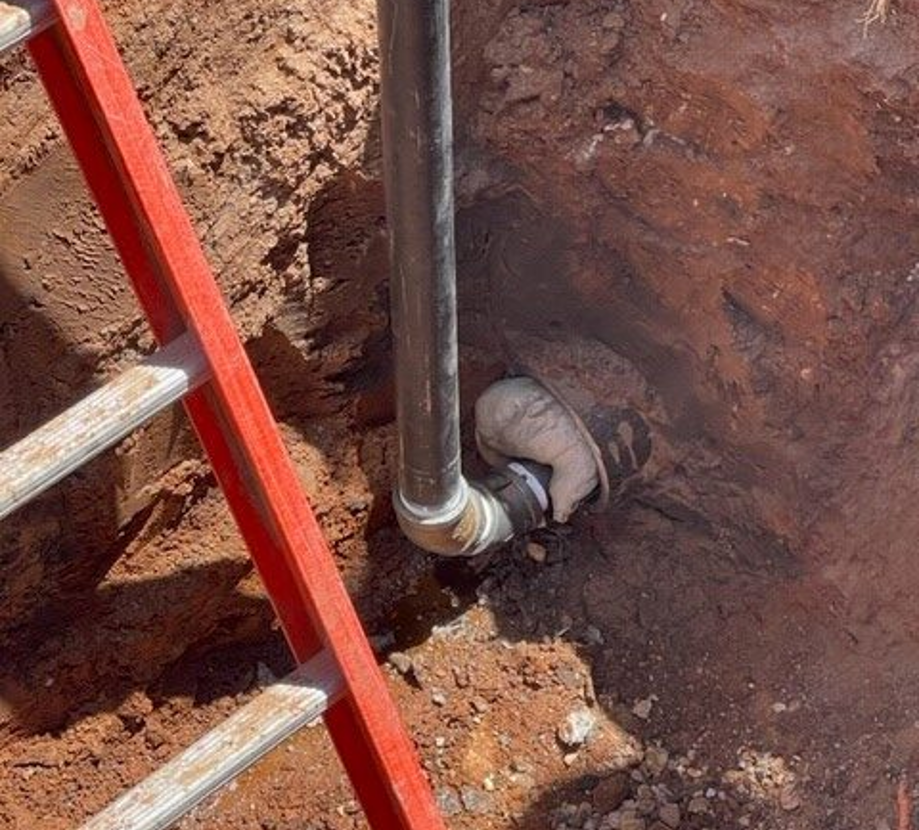
Exposed underground pipe and elbow in an excavated soil area beside an access ladder
Case study 01 · Pipe abatement

Underground Pipe Void Filling & Infrastructure Stabilization

Challenge: A deteriorating below-grade pipe led to voids and soil loss near critical mechanical systems, raising concerns about support around adjacent infrastructure.

Solution: Texas Slab Guys performed targeted void filling and subsurface stabilization around the affected pipe area to address underground cavities and reduce the risk of continued washout. The pipe work itself was not part of this stabilization description.

Results:

  • Stabilized the affected area without removing surrounding infrastructure.
  • Addressed existing soil loss and voids.
  • Completed the repair the same day, with no service interruption reported.

Underground Pipe Void Filling & Infrastructure Stabilization — exposed pipe and surrounding excavation.

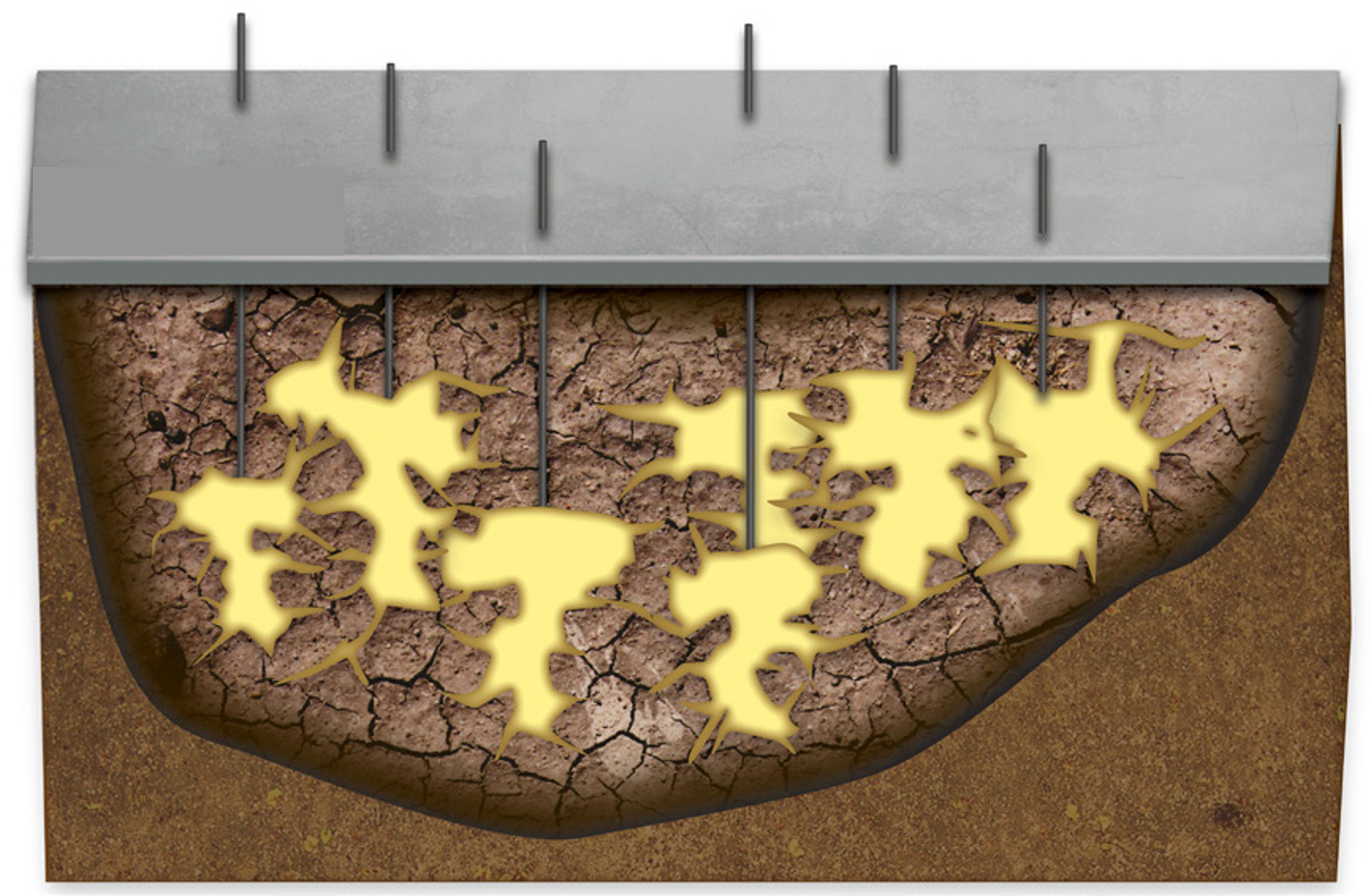
Conceptual cross-section illustrating injection access points and treated areas beneath a concrete slab
Case study 02 · Industrial facility

Industrial Warehouse Concrete Slab Void Filling

Challenge: A commercial customer experienced floor movement affecting heavy industrial equipment. Testing identified a void approximately one inch deep beneath the concrete floor, associated with erosion and insufficient subsurface support.

Solution: Texas Slab Guys performed targeted void filling and stabilization beneath the affected concrete floor without requiring slab removal.

Results:

  • Work completed in approximately six hours.
  • No production downtime was reported.
  • The area returned to service immediately.
  • Avoided the need for concrete slab replacement.

Industrial Warehouse Concrete Slab Void Filling — educational illustration of subsurface treatment, not a photograph or depiction of actual project conditions.

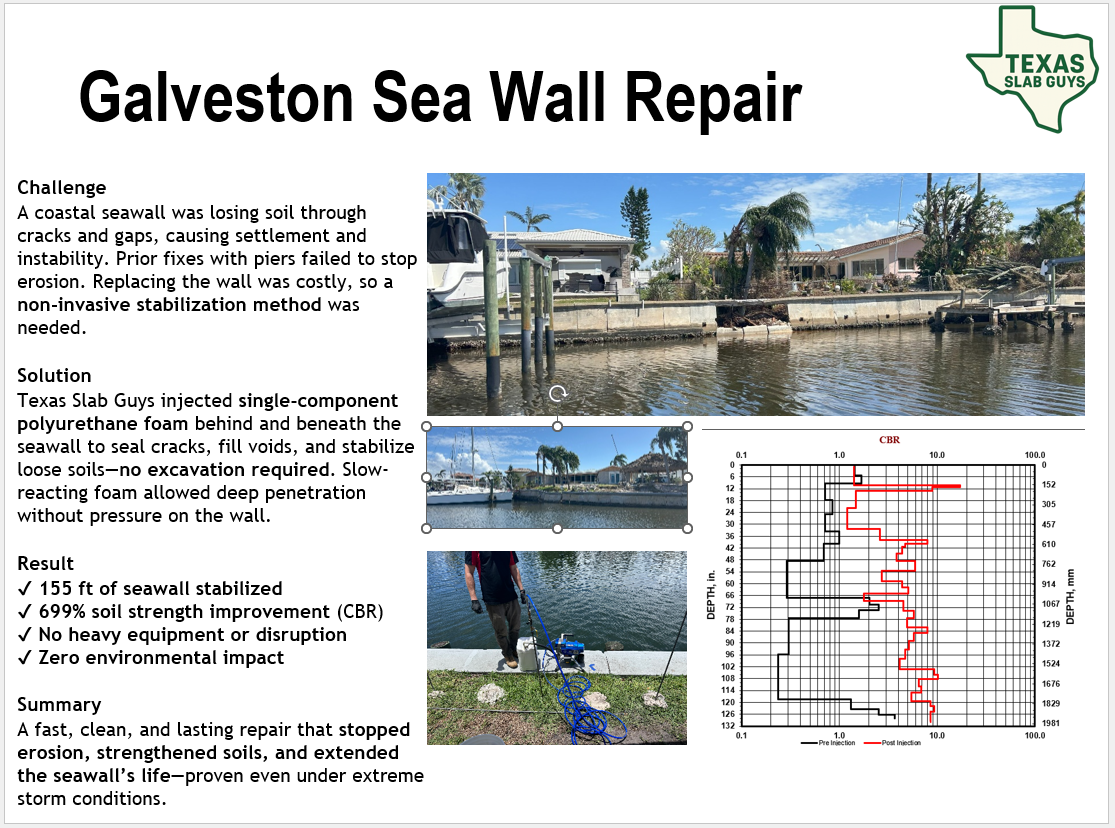
Galveston seawall repair case study with waterfront photographs, soil stabilization work and a CBR testing chart
Case study 03 · Waterfront

Galveston Seawall Void Filling & Soil Stabilization

Challenge: A coastal seawall was losing soil through cracks and openings, causing erosion, void formation and stability concerns. Previous repairs had not adequately controlled soil loss.

Solution: Texas Slab Guys performed targeted void filling and subsurface stabilization behind and beneath the affected seawall.

Results:

  • Approximately 155 linear feet of seawall were treated.
  • Work was performed without large-scale excavation.

Galveston Seawall Void Filling & Soil Stabilization — supplied case-study image with waterfront photographs, project details and CBR testing results.

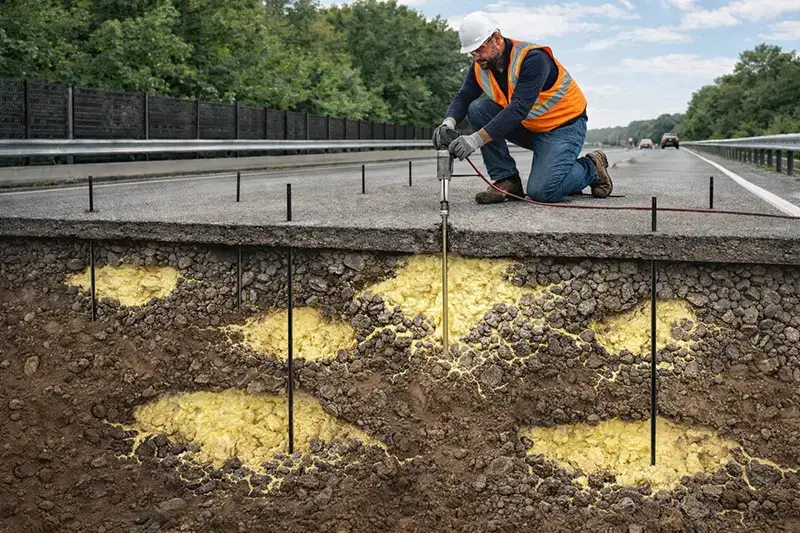
Illustration of a worker injecting beneath a highway slab, with a conceptual cutaway showing subsurface treatment
Case study 04 · Transportation

Highway Concrete Slab Void Filling & Stabilization

Challenge: A roadway contractor identified voids beneath concrete panels that moved under passing truck loads. Stabilization was time-sensitive to maintain roadway operations.

Solution: Texas Slab Guys performed overnight void filling and stabilization beneath the affected concrete panels, including targeted correction of the adjacent shoulder where needed.

Results:

  • Project completed in approximately 5.5 hours.
  • Work was performed overnight, with no daytime lane closures reported.
  • The roadway returned to service following the required curing interval.

Highway Concrete Slab Void Filling & Stabilization — educational illustration of subsurface treatment, not a photograph or depiction of actual project conditions.

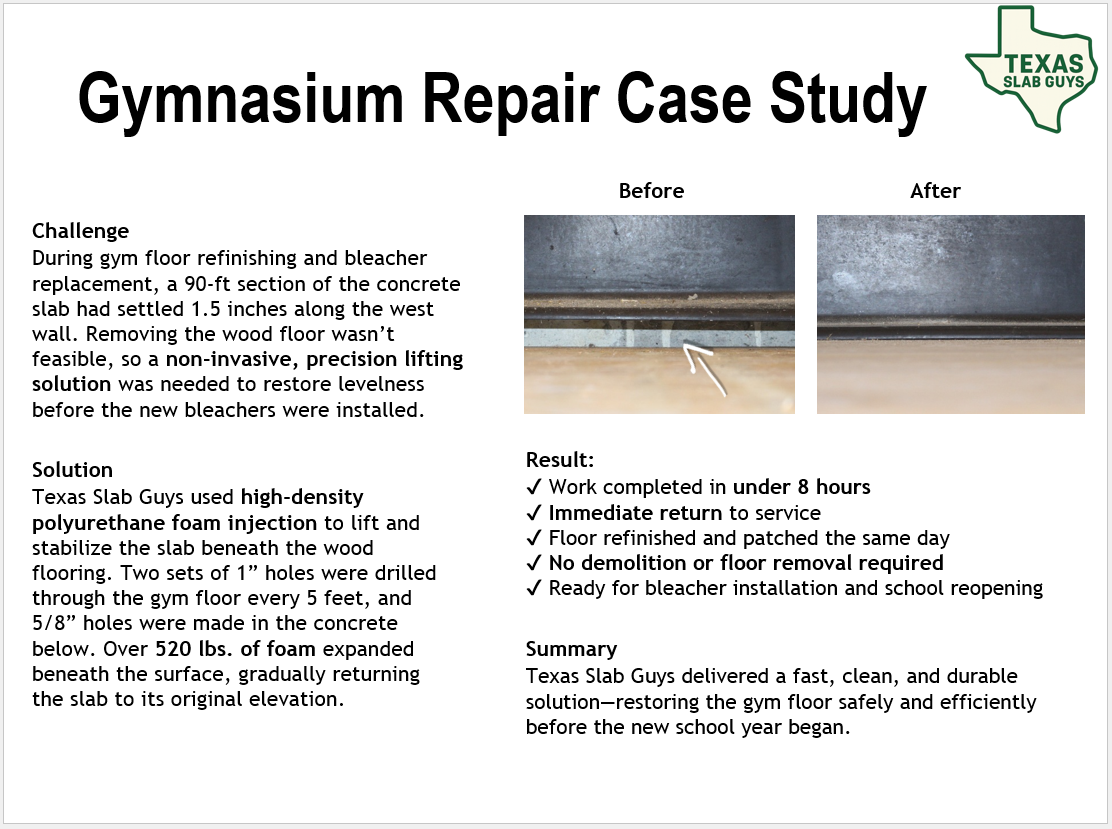
Texas Slab Guys gymnasium repair case study with before-and-after floor photographs and a project summary
Case study 05 · School facility

Gymnasium Floor Void Filling & Concrete Stabilization

Challenge: During gym floor refinishing and bleacher replacement, a roughly 90-foot section of concrete had settled approximately 1.5 inches along a wall. Removing the existing wood floor was not practical.

Solution: Texas Slab Guys performed precision stabilization and lifting beneath the finished floor through strategically placed injection access points, avoiding extensive demolition.

Results:

  • Work completed in under eight hours.
  • Concrete returned to the required elevation.
  • No complete floor demolition was required.
  • The facility could proceed with finishing and bleacher installation.

Gymnasium Floor Void Filling & Concrete Stabilization — supplied case-study image with before-and-after photographs and project details.

What to look for

Signs You May Have a Void Beneath Concrete

These observations can point to a support issue, but none is conclusive proof of an underground void. A site evaluation may be needed to understand the cause and choose a repair.

  • Hollow sounds under concrete
  • Settling or uneven concrete panels
  • Recurring cracks associated with movement
  • Visible gaps along slab edges
  • Soil washout after heavy rainfall
  • Sunken driveway or sidewalk areas
  • Settlement near plumbing repair locations
  • Floor movement near equipment
  • Drainage-related erosion around structures
What causes voids under concrete in Houston? Water movement, erosion, plumbing leaks, incomplete trench restoration, soil consolidation and changing soil moisture can all contribute. Confirming the specific cause requires looking at the site—not just the crack or hollow sound.

Choose the right scope

What's the Difference Between Void Filling and Concrete Leveling?

Void filling primarily addresses a gap where supporting material is missing. Concrete leveling adjusts the elevation of settled concrete. Some projects need one, both, or another type of repair.

QuestionVoid fillingConcrete leveling
Primary purposeFill an assessed support gap beneath or beside concrete.Adjust settled concrete toward a specified elevation.
What it addressesMissing, displaced or insufficient supporting material in a defined area.Uneven or sunken concrete panels when the slab is suitable for lifting.
Can both be needed?Yes. A project may need stabilization and an elevation adjustment, or may require replacement, drainage correction, structural repair or engineering review instead.

Can voids be filled without removing concrete? Often a targeted approach can avoid slab removal when the existing concrete, access and site conditions are suitable. That cannot be assumed in advance; severely damaged concrete or other site constraints may call for a different repair.

Project-specific advantages

Why Property Owners Choose Void Filling

When the conditions fit, targeted void filling can restore support beneath an affected surface while helping avoid unnecessary demolition. The right repair depends on the cause of the void, the condition of the slab and what the site needs to achieve.

It is not a blanket guarantee against future settlement or a replacement for repairing active leaks, drainage failures or damaged structures.

  • Restore support beneath affected concrete
  • Address existing underground cavities
  • Reduce the need for unnecessary demolition
  • Improve support for certain concrete surfaces
  • Help preserve suitable existing infrastructure
  • Reduce disruption where conditions permit
  • Serve residential and commercial applications
  • Support project-specific repair planning

Straight answers on scope

How Much Does Void Filling Cost in Houston?

There is no responsible one-price answer without understanding the site. A project-specific estimate depends on what needs to be treated and the requirements for access, depth and performance.

Factors that can affect cost include estimated void volume, treatment depth, surface access, the size and number of affected areas, structural and load requirements, soil and moisture conditions, site restrictions, residential versus commercial scope, engineering or testing needs, and whether slab lifting is also required. No pricing range is listed because those factors can change the work substantially.

For an initial estimate, share photographs and a short description of the affected area, when the movement began, and any known plumbing, drainage or repair history. For larger commercial work, plans, geotechnical reports or a project scope can help; those documents are optional.

Discuss Your Project

Local contractor · documented work

Why Choose Texas Slab Guys for Houston Void Filling?

Texas Slab Guys is a Houston-area concrete solutions company serving residential, commercial and infrastructure projects. The work shown on this page reflects a range of real repair conditions—not a claim that every property needs the same procedure.

Project experience includes underground pipe-related voids, industrial warehouse floors, seawall stabilization, roadway panels and school gymnasium floors, alongside residential driveways, walkways, patios and garages. We discuss the site, the intended result and any constraints before outlining a possible scope. We do not promise that injection alone can resolve every foundation, drainage or structural issue.

Greater Houston and nearby Gulf Coast communities

Concrete Void Filling Across Houston & Surrounding Counties

Houston is our primary market, with service availability across Greater Houston and nearby communities along the Gulf Coast and surrounding counties. Coverage depends on project location and scope; contact us to discuss your site.

Projects are considered across the region—from Houston, Bellaire, West University Place, River Oaks and Memorial to Katy, Sugar Land, Missouri City, Richmond, Rosenberg, Pearland, Friendswood and League City. We also serve communities including Galveston, Texas City, The Woodlands, Spring, Conroe, Cypress, Tomball, Baytown, Pasadena, Deer Park, Humble, Kingwood, Alvin, Angleton, Fulshear, Brookshire, Sealy and nearby areas.

Harris County

Houston, Bellaire, West University Place, River Oaks, Memorial, Pasadena, Baytown, Deer Park, Humble and Kingwood.

Fort Bend County

Sugar Land, Missouri City, Richmond, Rosenberg and Fulshear.

Galveston County

Galveston, Texas City, League City and nearby coastal communities.

Chambers County

Bay communities and nearby communities east of Houston.

Liberty County

Liberty and communities northeast of the Houston metro.

Montgomery County

The Woodlands, Spring and Conroe.

Brazoria County

Pearland, Alvin, Angleton and nearby communities.

Waller County

Brookshire and surrounding communities west of Houston.

Austin County

Sealy and surrounding communities.

Clear answers, without overpromising

Frequently Asked Questions About Houston Void Filling

Direct answers to common questions about under-slab void filling, commercial work and service around Greater Houston.

1. What is concrete void filling?

Concrete void filling is the placement of suitable fill into an assessed space where supporting material is missing or insufficient beneath or beside concrete. The goal is to restore support in the affected area; it does not independently repair leaks, drainage failures or damaged structural components.

2. How do I know if there's a void under my concrete?

Hollow sounds, settling panels, recurring movement-related cracks, gaps at slab edges and soil washout can be possible indicators. They do not confirm a void on their own, so an evaluation may be needed.

3. What causes voids beneath concrete slabs in Houston?

Water infiltration, soil erosion, plumbing leaks, underground drainage problems, poorly compacted backfill, utility or foundation excavations, soil consolidation and changing moisture conditions can all contribute. The cause depends on the site.

4. Can you fill voids beneath an existing foundation?

A void near or beneath an existing foundation may be evaluated for a suitable repair, but not every foundation problem is a void-filling project. Structural movement or foundation distress may require a foundation professional or engineer to diagnose it.

5. Can void filling repair areas after plumbing excavation?

It may address a remaining support gap after plumbing excavation, tunnel work or a slab leak repair when the pipe issue has been addressed and site conditions are suitable. Void filling is not pipe repair.

6. Can you repair poorly compacted backfill?

Backfill settlement or a resulting void can be assessed for targeted stabilization. The repair approach depends on the trench, utilities, soil, access and whether water or another cause of movement remains active.

7. Does void filling require concrete removal?

Not always. Some suitable repairs can be performed through small access points rather than removing the slab, but concrete condition, access and project requirements determine whether that is practical.

8. What's the difference between void filling and concrete leveling?

Void filling addresses a gap in supporting material; concrete leveling adjusts the elevation of settled concrete. Some projects need both, while others may need replacement, drainage correction or structural evaluation.

9. Can void filling help stabilize warehouse floors?

It may be considered for a warehouse floor when a support void or weak zone is identified and the floor is suitable for treatment. Equipment loads, operations, access and any alignment concerns should be reviewed for the project.

10. Can you fill voids behind seawalls?

Voids and soil loss behind or beneath a seawall can be evaluated for targeted filling and stabilization. The wall condition, source of soil migration and water movement matter; filling does not replace needed seawall repair.

11. How long does a void filling project take?

Duration varies with access, site size, treatment locations, project coordination and any required curing or return-to-service interval. A schedule is established for the actual scope rather than assumed for every job.

12. How much does concrete void filling cost?

Cost depends on estimated void volume, depth, access, affected area, soil and moisture conditions, loads, site restrictions, testing or engineering and whether leveling is also needed. Photos and a project description help start a project-specific estimate.

13. Do you provide commercial void filling services?

Yes. Texas Slab Guys evaluates commercial, industrial and infrastructure void-filling projects in Greater Houston, including warehouse floors, utility backfill, parking areas, roadways and waterfront structures. The scope depends on site conditions and operational requirements.

14. What is deep injection?

Deep injection is a subsurface stabilization technique used with the intent of addressing deeper voids, weak zones or inadequately supported soils. Locations, depths and method selection depend on site conditions and the project objective.

15. Which counties around Houston do you serve?

Service availability includes Harris, Fort Bend, Galveston, Chambers, Liberty, Montgomery, Brazoria, Waller and Austin counties. Coverage depends on the project location and scope; contact Texas Slab Guys to discuss your property or facility.

Start with the facts on site

Have a suspected void beneath concrete?

Tell us what is moving, where it is, and what you already know about water, plumbing or previous repairs. We will help you understand a sensible next step.

Call 832.990.1891 Free Estimate