5 Warning Signs Your Concrete Slab Needs Professional Repair
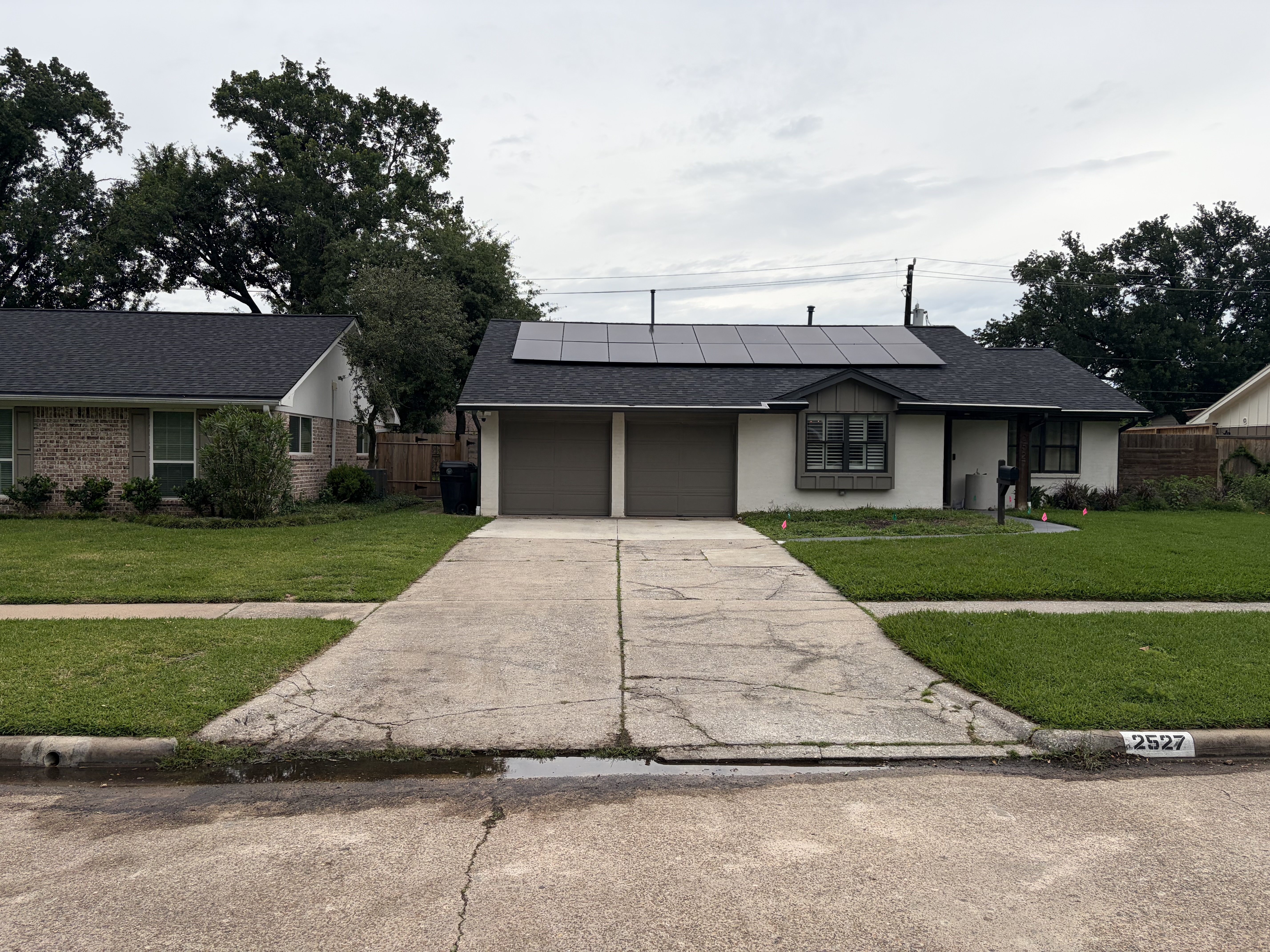
Here's something I've noticed: people pay close attention to their concrete slabs exactly twice — when they're first poured, and when something's obviously gone wrong. Everything in between is kind of a blind spot.
Which makes sense, really. Once a driveway or patio is in, it just sits there doing its job. You stop registering it. Years pass. The ground underneath it is slowly changing — soil compacting, moisture levels shifting, small voids forming — and none of that is visible from the surface.
Then one day a crack that wasn't there last year is now wide enough to catch your foot on. Or you notice a corner of the slab has dropped an inch. Or your garage door suddenly won't close flush, and you can't figure out why.
The five things below are what to watch for before you reach that point.
1. Cracks That Weren't There Before — or Ones That Keep Changing
Fresh concrete cracks. That's just chemistry — it shrinks slightly as moisture leaves during curing, and the resulting tension has to go somewhere. Most of those early cracks are fine. They're stable, they're small, and they don't mean anything's wrong.
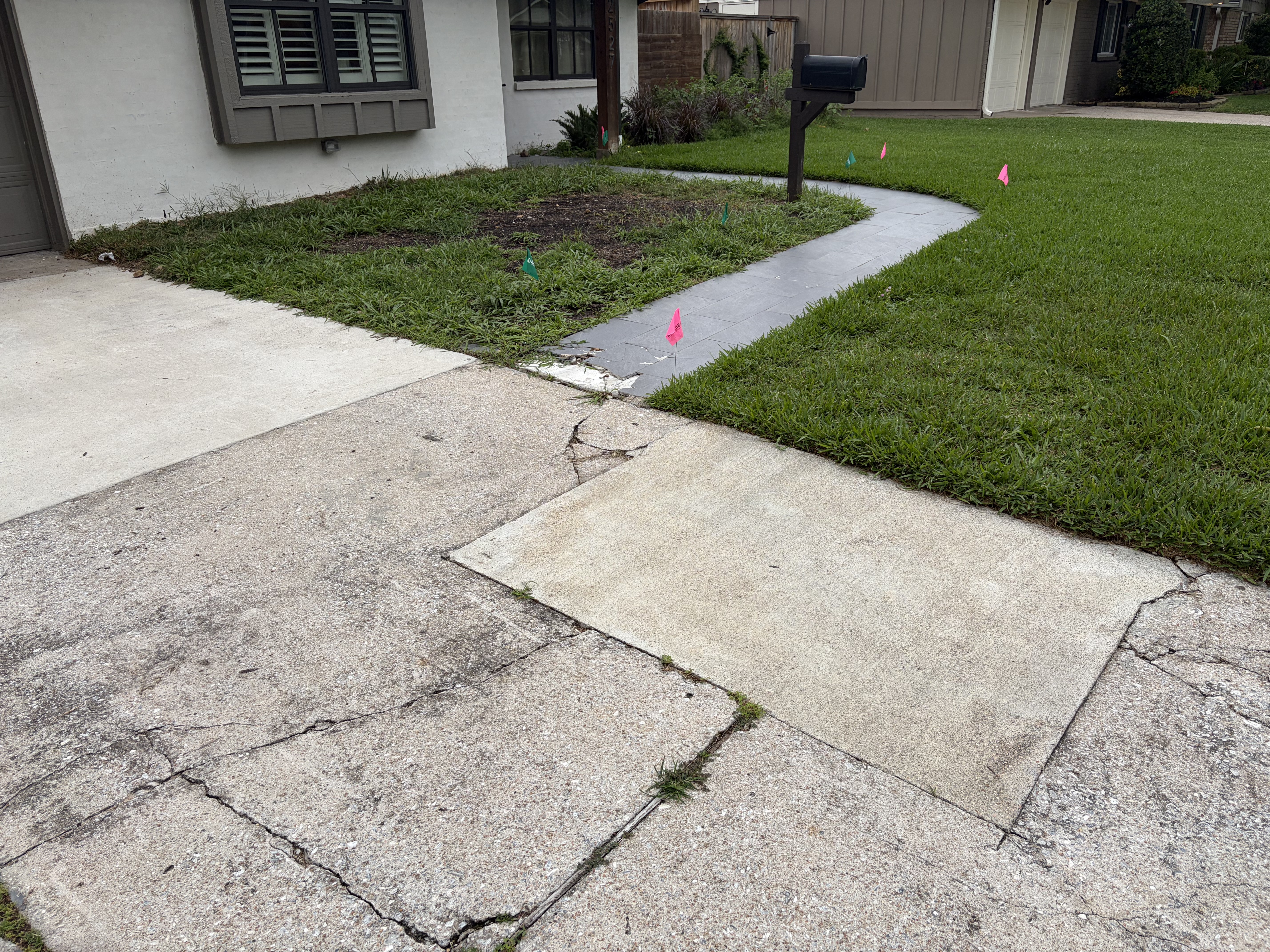
What changes the picture entirely is a crack that moves. Gets wider. Gets longer. Shows up in a new place right after you thought you'd dealt with the last one. That kind of behavior almost always points to movement in the soil underneath the slab, not wear on the surface itself.
The ground shifts for all sorts of reasons: poor drainage eroding the base over time, clay soils expanding and contracting with moisture, fill that wasn't compacted well when the slab was originally poured. Whatever the cause, the crack you can see is just the slab's way of telling you about it.
Patching it without figuring out why it formed is understandable, but it rarely holds. Professionals who use concrete testing methods before recommending a repair are trying to answer that 'why' first — because the right fix is completely different depending on what's driving the cracking. Our concrete leveling services are designed to address the root cause — the soil movement beneath — not just the surface symptom.
2. A Section of Concrete That's Noticeably Lower Than It Used to Be
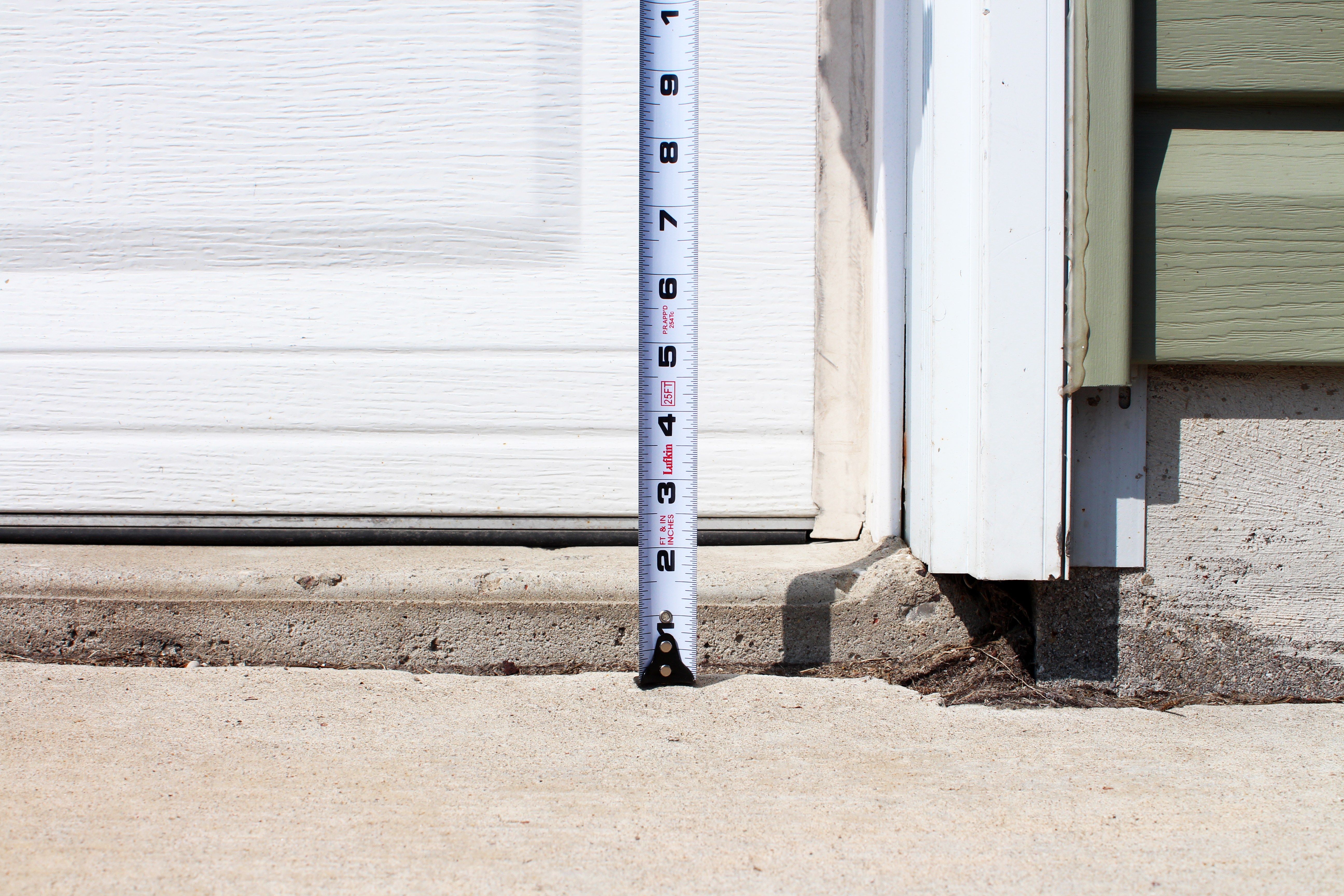
Go stand at the end of your driveway and actually look along its length. Not just a glance — really look. Is it flat? Or is one panel sitting lower than the one beside it, with a little lip between them where there used to be none?
Settled concrete is one of those things that happens gradually enough that it's easy to miss until it's obvious. A quarter-inch drop becomes a half-inch. Then an inch. Then you're backing out of the garage every morning over a bump you've just accepted as normal.
What's happening underneath is that the soil support has changed. Voids form from erosion, from organic material decomposing, from tree roots that are gone now. The slab, which was designed to sit on solid ground, ends up spanning empty space and sinks into it.
Aside from looking rough, a settled slab sends water the wrong direction, creates a genuine tripping hazard, and tends to keep sinking. The earlier it gets addressed, the less complicated the fix.
3. Doors or Windows That Suddenly Don't Work Right!
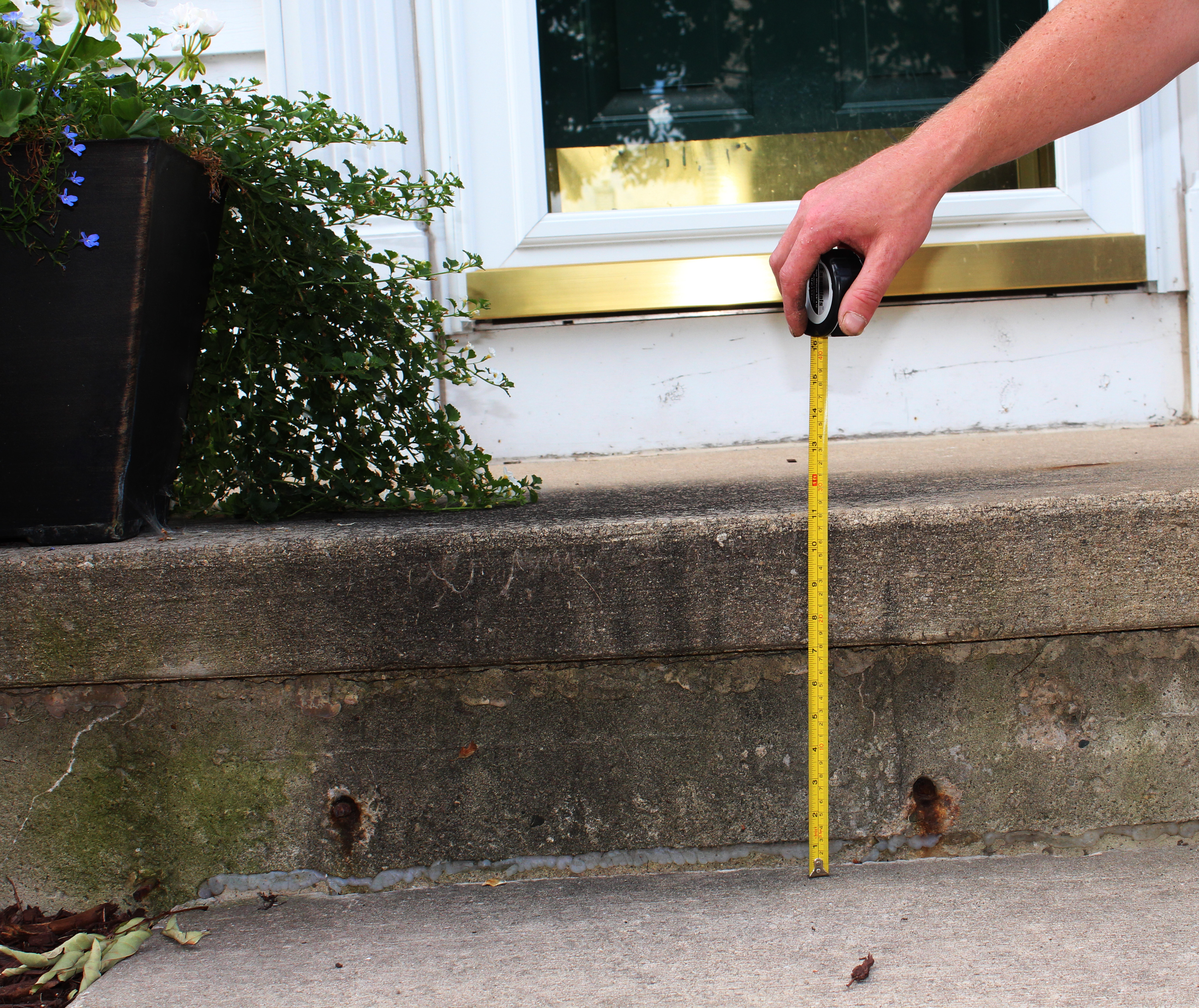
Sticking doors are one of those things you blame on humidity, then on the hinges, then just sort of live with. But if it's happening in multiple spots, or if it started around the same time you noticed something off about the slab or the floors — pay attention.
When a slab foundation settles unevenly, the walls above it don't stay perfectly plumb. They shift a little. Just enough that a door frame that used to be square is now slightly racked, and the door won't swing the way it did before. You might also see it as a gap opening up along the top of a window frame, or a latch that no longer lines up with its striker plate.
None of this is dramatic on its own. But it's the kind of thing that foundation movement shows up as early on, before there's anything obviously structural to look at. Worth noting if it's showing up alongside anything else on this list.
4. Puddles in the Same Spot Every Time It Rains!
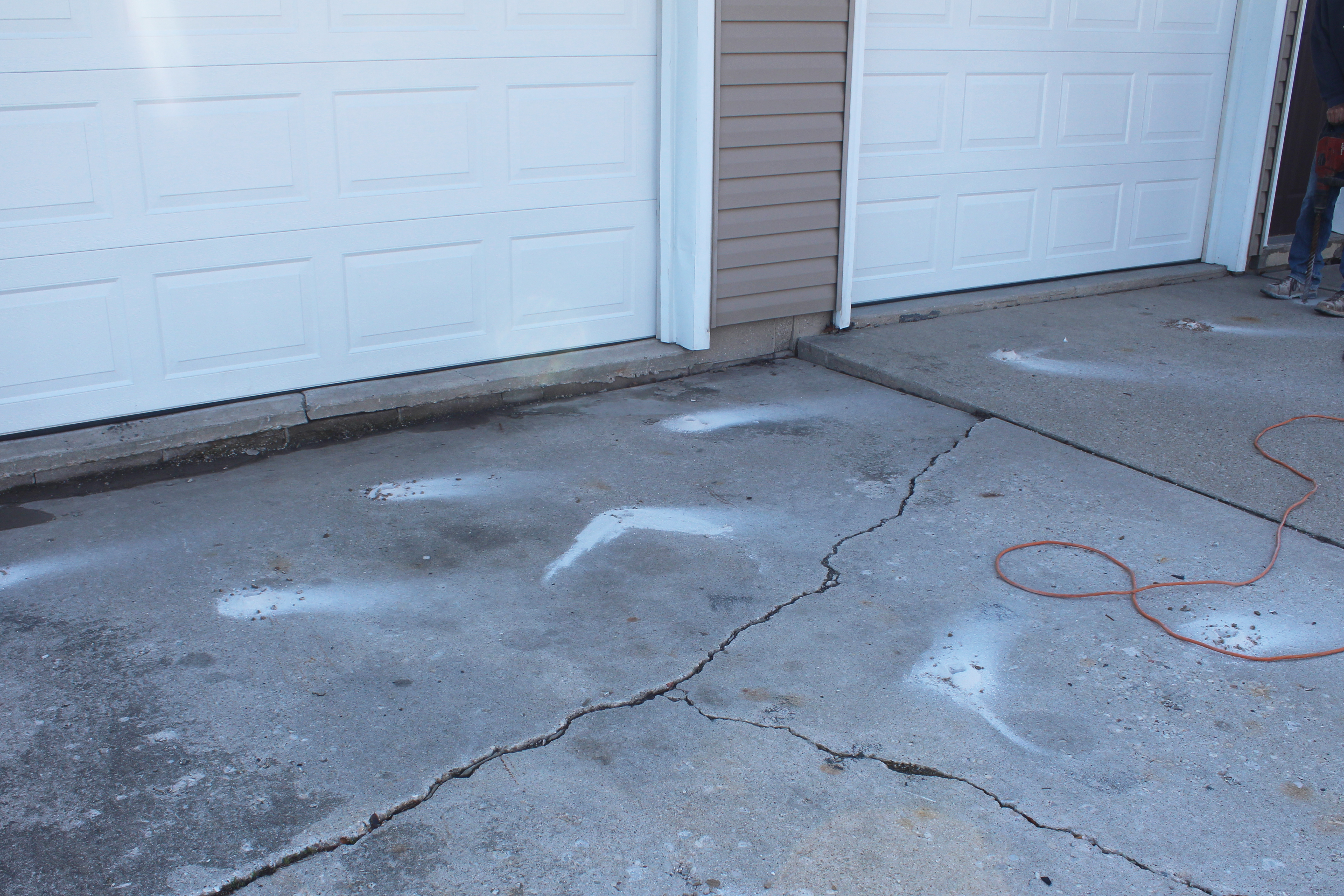
Concrete slabs are supposed to shed water. That's literally part of how they're designed — a slight grade built in so rain runs off away from the structure rather than sitting next to it or under it. When a slab settles, that grade changes. Low spots appear. Water finds them.
If there's a spot in your driveway or patio that collects water reliably after rain — especially if that's a newer development — it's worth considering whether the slab has moved. Because standing water isn't just a nuisance. It works on the soil beneath the slab, accelerates erosion, and worsens whatever drainage problem already existed. It's both a symptom and a cause of further deterioration.
Drainage is something that gets accounted for in professional concrete work from day one. The construction testing and quality control practices that go into a well-built slab include evaluating soil behavior and site drainage specifically because water mismanagement is one of the most reliable predictors of early slab failure. When those standards slip, this is often where it shows up first.
5. Flooring Problems Inside That Keep Coming Back!
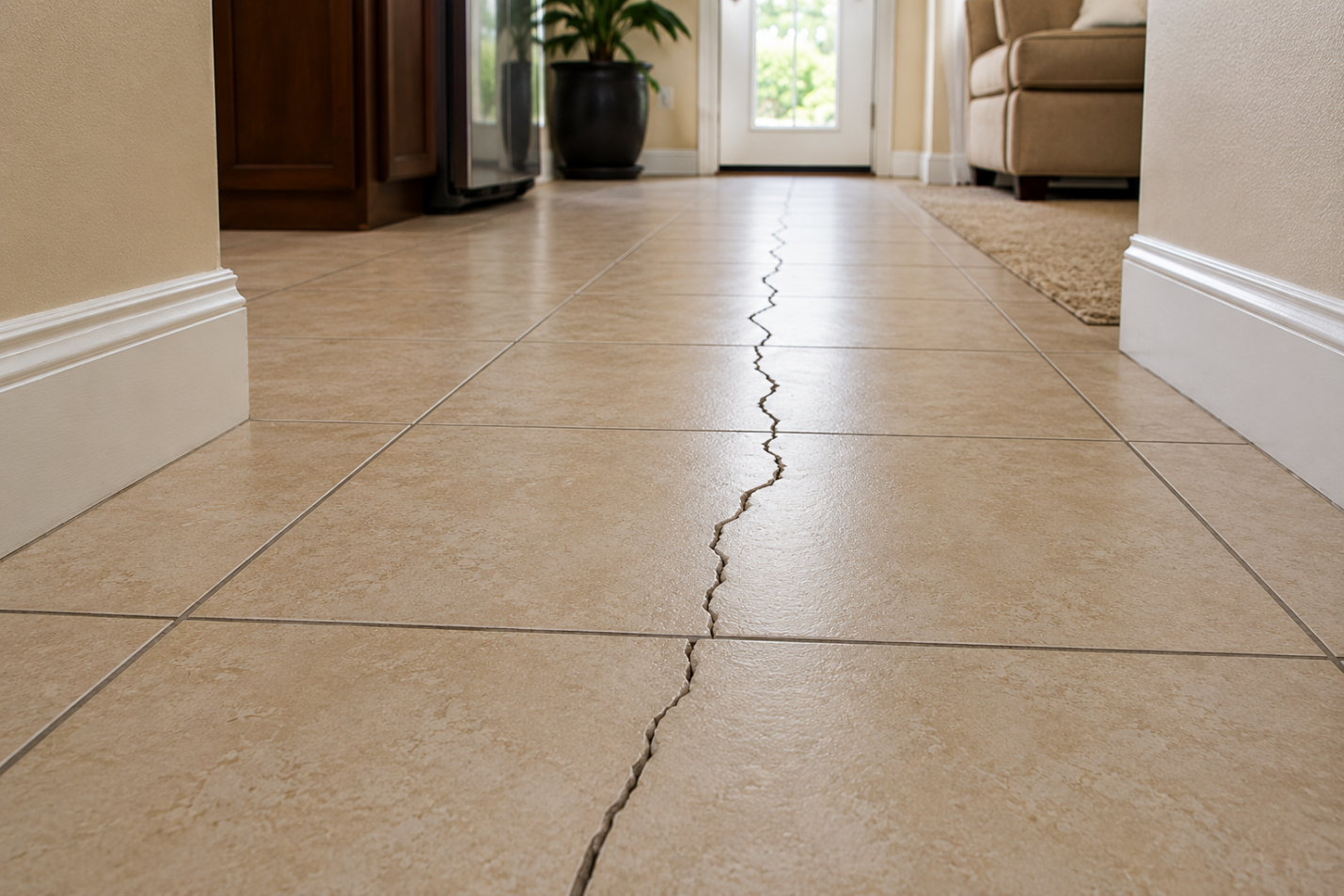
Cracked tile in one spot, you fix it. Cracked again six months later, same area. Grout lines that separate along one wall no matter how many times you redo them. A section of floor that has a subtle give to it when you walk across, like something underneath has shifted.
For slab-on-grade construction — which covers a huge portion of homes in warmer regions — interior flooring is often the first place slab movement becomes visible. The slab shifts, and whatever's on top of it shifts too. Rigid materials like tile and grout can't flex with it, so they crack instead.
The frustrating part is that cosmetic repairs keep failing because they're fixing the symptom. The tile isn't the problem. If the same damage keeps recurring in the same spot, the slab below it probably needs to be looked at.
The Sooner You Catch It, the More Options You Have
Concrete problems don't plateau on their own. A small amount of settlement tends to become more settled. An erosion problem that's been running for two years has done significantly more damage than one that's been running for two months. The window where a problem is easy and inexpensive to fix is real, and it doesn't stay open indefinitely.
None of these signs automatically mean you're in for a major repair. Some slab issues, caught early, have relatively simple solutions. But 'caught early' is doing a lot of work in that sentence — it requires actually catching them.
If two or three things on this list are sounding familiar, getting a professional assessment is the practical next step. You'll find out what's actually going on beneath the surface, and that's a lot more useful than guessing or waiting until the answer becomes impossible to ignore.
Final Thoughts
Most concrete slab problems don't appear overnight. They usually start with small warning signs that are easy to dismiss — a crack that seems harmless, a section of concrete that's slightly uneven, or a puddle that forms in the same spot after every rain.
The challenge is that these issues often become more expensive to address the longer they're ignored. Paying attention to early changes can help homeowners identify potential problems before they lead to more significant repairs.
If you've noticed one or more of these warning signs around your property, it's worth taking a closer look. Understanding what's causing the problem is often the first step toward protecting the long-term stability and value of your home.
Noticing any of these warning signs on your property? Texas Slab Guys helps homeowners across Houston and Texas assess, repair, and level concrete driveways, patios, sidewalks, and pool decks. Get a straight assessment and an honest estimate.
Get a LevelEstimate™ Quote Call (832) 990-1891